CONNECTING ALUMINUM CONDUCTORS TO MARECHAL® PLUGS AND SOCKET-OUTLETS AND CONNECTORS: WHAT CAN BE DONE SAFELY AND RELIABLY.
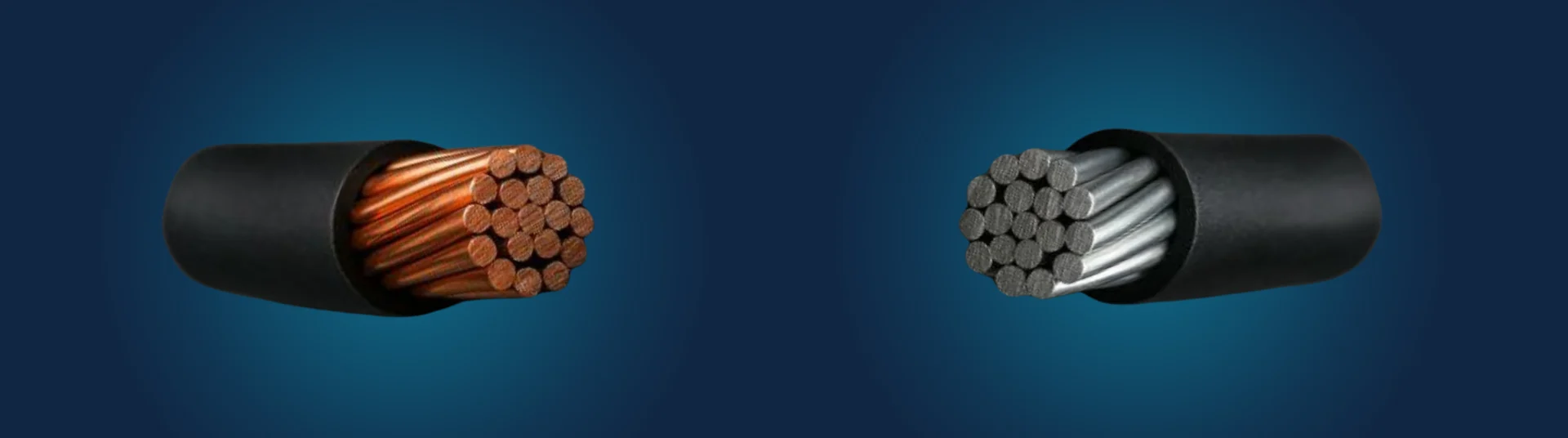
Can you wire an aluminium conductor to industrial socket MARECHAL®?
It is entirely possible to wire an aluminium conductor to industrial socket MARECHAL®, provided that specific technical rules and installation best practice are strictly followed.
Why aluminum is increasingly used across industrial applications
Aluminum-core conductors and cables are now widely deployed across many industrial sectors, particularly for high-power installations and distribution networks.
Compared to copper, aluminum provides several clear and measurable advantages:
- Lower weight
- Lower raw material cost
- Strong resistance to atmospheric corrosion
Aluminum vs copper: what really matters in practice
Aluminum offers a better conductivity-to-weight ratio than copper.
At equivalent weight, it can carry more current.
However, a larger conductor cross-section is required to achieve equivalent electrical performance.
PRACTICAL EXAMPLE (EQUIVALENT ELECTRICAL PERFORMANCE)
- A rigid copper cable with a 25 mm² cross-section typically has an outer diameter of 12.5 mm.
- To achieve equivalent performance, a rigid aluminum cable requires a 35 mm² cross-section, resulting in an outer diameter of approximately 13.5 mm.
TECHNICAL COMPARISON SUMMARY
| Criterion | Copper | Aluminum | Observation |
|---|---|---|---|
| Conductivity (in m/(Ω.mm²), at 20 °C) | 56 | 35 | Copper is 1.5 times more conductive than aluminum. |
| Density (kg/m3) | 8.920 | 2.700 | Aluminum is 3 times lighter than copper. |
| Costs ($/ton, as of 2025-11) | 10.600 | 2.500 | Aluminum is more than 4 times more cost-effective than copper. |
The key technical consideration: galvanic corrosion
MARECHAL® devices are equipped with copper terminals and are certified for use with copper-core conductors.
When two dissimilar metals — such as copper and aluminum — are in contact, they are subject to electrochemical degradation known as « galvanic corrosion ».
This phenomenon is well understood and fully manageable in industrial environments when proven installation solutions are applied.
SEVERAL SOLUTIONS ARE AVAILABLE TO MITIGATE THIS PHENOMENON, ENABLING SAFE AND LONG-TERM WIRING OF AN ALUMINUM CONDUCTOR TO INDUSTRIAL SOCKET MARECHAL®:
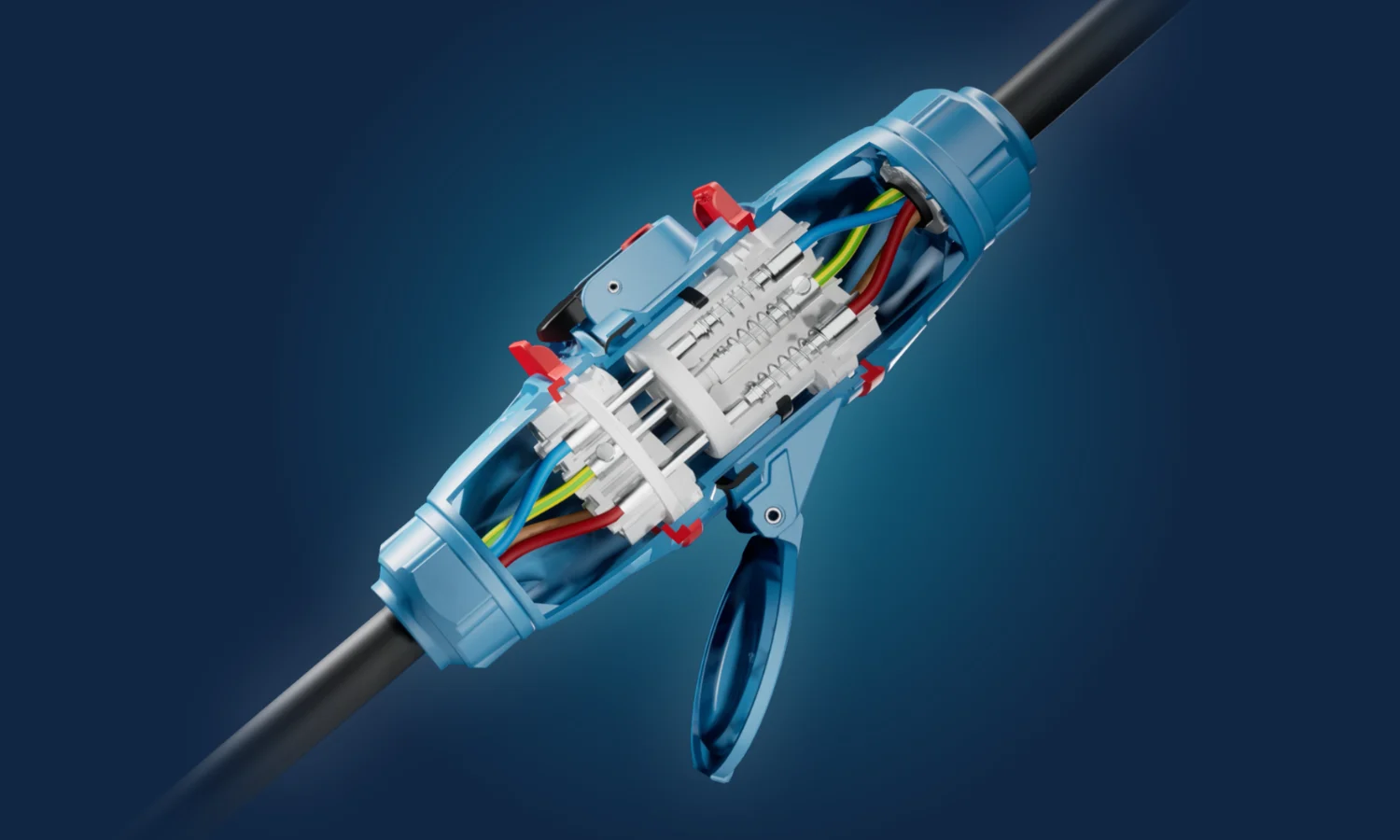
Solution 1 – Direct connection into MARECHAL® terminals
- Lightly abrade the surface of the conductor core that will be in contact with the terminal,
- Apply an aluminum/copper contact grease to optimize contact resistance and limit galvanic corrosion between the aluminum conductor and copper terminal,
- Insert the conductor into the terminal and apply the tightening torque specified in the instruction sheet.
This method enables:
- Reduced contact resistance
- Significant reduction of galvanic corrosion risk
- Long-term mechanical reliability.
Contact grease availability
MARECHAL ELECTRIC supplies its own aluminum/copper contact grease under reference 9GREASE-CTC-T (200 g).
Solution 2 – Indirect connection into MARECHAL® terminals via bimetallic lug or ferrule
- Select an aluminum/copper “bimetallic” lug or ferrule.
- Wire the aluminum conductor into the aluminum section of the lug or ferrule.
- Crimp the conductor.
- Insert the lug or ferrule into the terminal and apply the tightening torque specified in the instruction sheet.
Aluminum-copper bimetallic reducer or enlarger ferrule
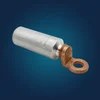
Aluminum-copper bimetallic lug
(eyelet type)
This is the preferred solution for large conductor cross-sections, helping to minimize temperature rises risks.
KEY TAKEAWAYS
- Yes, aluminum conductors can be used with MARECHAL® devices.
- The solutions are standardised, industry-recognised, and field-proven.
- Safety and durability depend primarily on correct installation practices — not on conductor material alone.
Conclusion
When these best practices are applied, MARECHAL® devices can be safely and reliably used with aluminum-core conductors and cables, without compromising connection performance and durability.
Questions? Technical support needed?
Our teams are available to help you select the solution best suited to your industrial environment and operational constraints.